


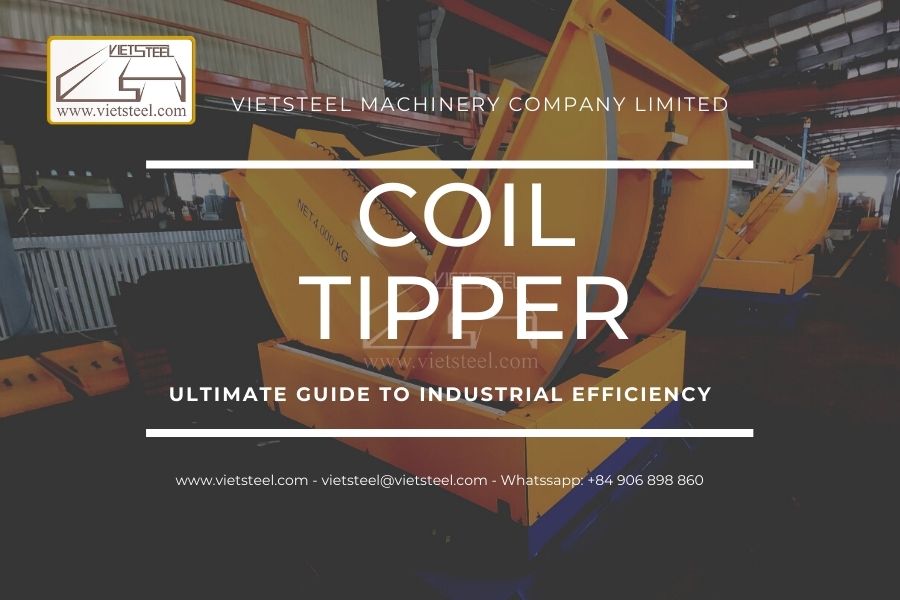
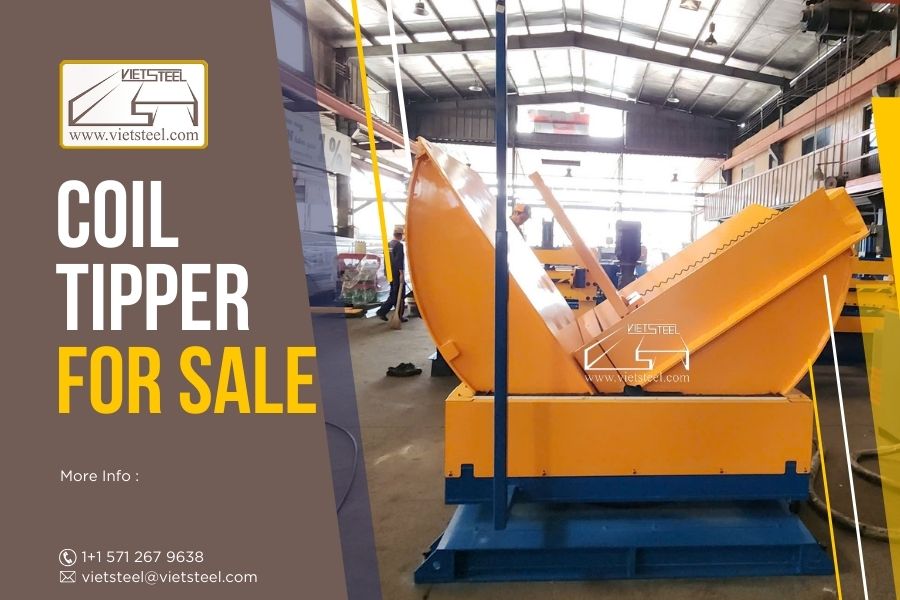
Introduction to Coil Tippers: The Backbone of Efficient Coil Handling Coil tippers, also known as coil upenders, are game-changing industrial machines designed to rotate heavy metal coils—such as steel, aluminum, or copper—by 90° or even 180° to reposition them horizontally or vertically. These robust devices eliminate the need for cumbersome overhead cranes or rail systems, slashing handling time and boosting workplace safety. With load capacities ranging from 1.5 to 100 tons (3,000 to 200,000 pounds), coil tippers are indispensable across industries like steel manufacturing, automotive, and logistics. This guide dives deep into the types, applications, and benefits of coil tippers, helping you choose the perfect solution to supercharge your operations.
Nội dung chính
Types of Coil Tippers Tailored Solutions for Every Need
Coil tippers come in a variety of designs, each engineered to meet specific operational demands, from small workshops to high-volume production lines. Here’s a breakdown of the main types:
1. Hydraulic Coil Tipper Powerhouse for Heavy Loads
What It Is: Hydraulic coil tippers use advanced fluid power systems to effortlessly tilt massive coils, making them the go-to choice for heavy-duty applications.
Key Features:
High Load Capacity: Handles coils up to 50 tons or more.
Smooth Operation: Robust hydraulic systems ensure controlled, jerk-free tilting.
Built to Last: Designed for relentless, high-productivity environments. Applications: Steel mills, heavy metal fabrication, and shipbuilding industries. Why Choose It?
Tackles the heaviest coils with ease.
Reduces operator strain with automated controls.
Offers decades of reliability with proper maintenance. Considerations: Higher upfront costs and periodic hydraulic system maintenance. Example: A steel mill uses a hydraulic tipper to reposition 40-ton coils for rolling, cutting downtime by 30%.
2. Manual Coil Tipper Compact and Cost-Effective
What It Is: These tippers rely on human power via hand cranks or levers, perfect for smaller operations with lighter coils. Key Features:
Simple Design: Easy to set up and operate, no complex machinery.
Space-Saving: Fits in tight workshops or small facilities.
Low Maintenance: Minimal components mean fewer repairs. Applications: Small-scale metal fabrication, repair shops, or remote locations.
Why Choose It?
Budget-friendly for startups or low-volume operations.
Ideal for coils up to 5 tons.
No reliance on electricity, perfect for off-grid settings. Considerations: Not suited for heavy or frequent use due to manual effort. Example: A small aluminum fabrication shop uses a manual tipper to handle 2-ton coils, saving on equipment costs.
3. Mechanical Coil Tipper Efficient and Versatile
What It Is: Powered by electric motors and chain-driven mechanisms, mechanical tippers are ideal for lightweight to medium-weight coils.
Key Features:
Electric-Powered: Uses gear motors with single or dual chain sprockets for smooth rotation.
3/4 Round Cradle: Supported by four machined steel rollers for precision.
Customizable: Available in standard or bespoke configurations. Applications: Aluminum processing, thin steel coil handling, or medium-scale manufacturing.
Why Choose It?
Energy-efficient for mid-sized operations.
Precise control for delicate or lightweight coils.
Balances cost and performance. Considerations: Not designed for ultra-heavy coils; may need safety upgrades for high-speed use. Example: An aluminum plant uses a mechanical tipper to rotate 10-ton coils for cutting, improving throughput by 25%.
4. Automatic Coil Tipper: The Future of Coil Handling
What It Is: These high-tech tippers operate autonomously with sensors, actuators, and programmable logic controllers (PLCs), minimizing human intervention.
Key Features:
Automation: Sensors ensure pinpoint accuracy in coil detection and positioning.
High Throughput: Speeds up handling in fast-paced environments.
Seamless Integration: Connects with automated production lines or warehouse systems. Applications: Automotive plants, steel service centers, and large-scale manufacturing.
Why Choose It?
Skyrockets productivity in high-volume settings.
Reduces human error and enhances safety.
Fully customizable for unique coil sizes and workflows. Considerations: Higher initial investment and requires skilled technicians for maintenance. Example: An automotive factory uses an automatic tipper to process 20 coils per hour, slashing labor costs by 40%.
Applications of Coil Tippers: Transforming Industries
Coil tippers are versatile workhorses that streamline operations across multiple sectors. Here’s how they revolutionize key industries:
1. Production Lines: Precision and Speed
Coil tippers ensure coils are perfectly oriented for feeding into cutting, stamping, or rolling machines.
Benefits:
Cuts setup time by up to 50%. Prevents coil damage from misalignment. Boosts workflow efficiency in continuous production.
Example: In automotive manufacturing, a hydraulic tipper positions steel coils for stamping car body panels, ensuring seamless production.
2. Warehouse Operations: Space and Safety
Coil tippers optimize storage and handling of coils like steel, aluminum, or even paper.
Benefits:
Saves up to 50% of floor space by enabling vertical storage. Simplifies movement to racks or processing machines. Reduces risks of manual handling injuries.
Example: A steel service center uses an automatic tipper to stack coils vertically, freeing up warehouse space and speeding up inventory management.
3. Metal Working and Fabrication: Precision Craftsmanship
In fabrication shops, coil tippers align coils for rolling, cutting, or bending with pinpoint accuracy.
Benefits:
Ensures precise positioning for downstream processes. Minimizes material waste from mishandling. Accelerates fabrication by automating coil orientation.
Example: A fabrication shop uses a mechanical tipper to align aluminum coils for precision sheet cutting, reducing waste by 15%.
4. Logistics and Shipping: Streamlined Transport
Coil tippers simplify loading and unloading coils for trucks, ships, or trains.
Benefits:
Prevents coil damage during transport with proper orientation. Cuts loading/unloading time by up to 30%. Enhances safety by reducing manual handling.
Example: At a port, a hydraulic tipper repositions 25-ton steel coils for secure placement in shipping containers, ensuring safe transport.
5. Recycling Centers: Efficient Scrap Handling
Coil tippers manage scrap metal coils from appliances, vehicles, or industrial waste.
Benefits:
Simplifies handling of irregular scrap coils. Increases throughput by streamlining material processing. Improves safety by minimizing manual handling of hazardous materials.
Example: A recycling plant uses an automatic tipper to position scrap steel coils for shredding, boosting output by 20%.
Key Features That Make Coil Tippers Stand Out
Coil tippers are packed with features that ensure safety, efficiency, and durability:
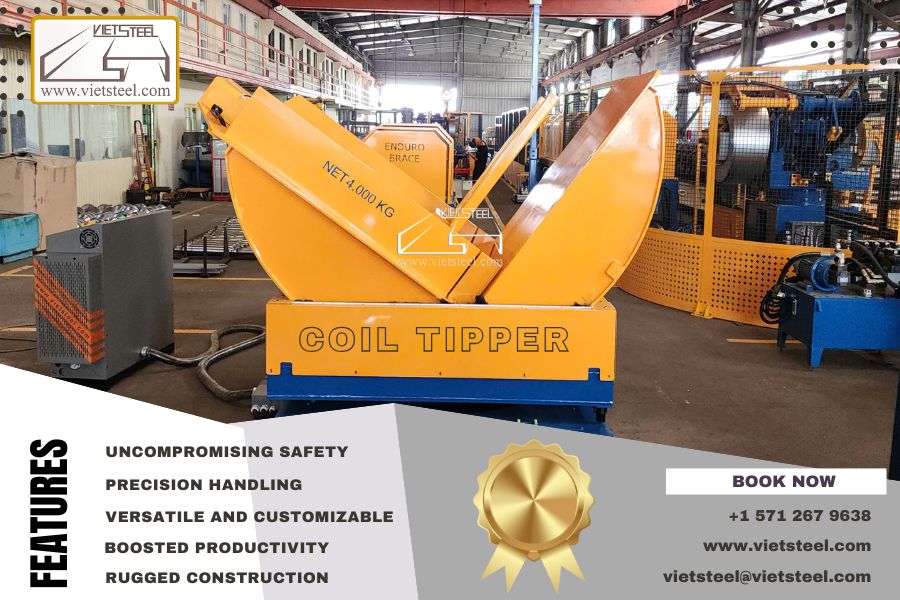
Uncompromising Safety
Equipped with emergency stop switches, overload sensors, safety locks, and compliance with standards like CE and EN ISO 9001:2015
Example: Sensors halt operations if a coil is misaligned, preventing accidents.
Precision Handling
Advanced sensors and actuators ensure accurate tilting and rotation, minimizing material damage.
Example: An automatic tipper adjusts rotation based on coil size, ensuring flawless positioning.
Versatile and Customizable:
Handles diverse materials (steel, aluminum, paper) and shapes (round, rectangular).
Custom designs cater to specific coil sizes and production needs.
Example: A hydraulic tipper is tailored for oversized coils in shipbuilding.
Boosted Productivity:
Automates coil handling, slashing processing time and errors.
Example: An automatic tipper processes 20 coils per hour vs. 5 with manual methods.
Rugged Construction:
Built with reinforced welded steel and anti-corrosion coatings for long-term reliability.
Example: Hydraulic tippers thrive in harsh steel mill environments without downtime.
Standard Features of Coil Tippers And Specification
- Load Capacities: From 1.5 to 100 tons.
- Construction: Heavy-duty welded steel with a full bottom plate.
- Drive Systems: Single or double chain drives based on load and balance.
- Wheels: Four flanged steel wheels with roller bearings for smooth movement.
- Gearbox: Enclosed right-angle drive with a single-speed motor and disc brake.
- Cradle Design: 3/4 round cradle with machined steel rollers (mechanical tippers).
- Platforms: Dual flat platforms for easy loading/unloading.
- Extras: Locking pins for maintenance and lifting lugs for positioning.
Electric requirement: 415V/3ph/50Hz
Power:
– Total 6.65kW
– Coil tiller: 3.7kW
– Slew: 2.2kW
– Restraining arm: 0.75kW
Weight of machine: 3 tons
Dimension (LxWxH): 1.9m x 1.8m x 2.4m
Speed: 1 rpm
Coil weight max: 6 tons
Coil width: 100 – 1500mm
Coil outer diameter: max 1500mm
Transmission by: Motor gearbox
Restraining arm: Multi position by motor gearbox
How to Choose the Perfect Coil Tipper
Selecting the right coil tipper can transform your operations. Consider these factors:
Coil Material and Weight:
Heavy, thick coils (e.g., 30-ton steel) need hydraulic tippers; lighter coils (e.g., 2-ton aluminum) suit manual or mechanical models.
Operational Intensity:
High-volume plants (e.g., automotive) benefit from automatic or hydraulic tippers; low-volume shops can opt for manual models.
Space Constraints:
Compact facilities need space-saving manual or turntable tippers; larger spaces can handle hydraulic or automatic models.
Budget:
Manual tippers are budget-friendly for startups; automatic tippers offer long-term savings for high-output operations.
Load Capacity:
Choose a tipper with 10-20% extra capacity (e.g., 48-ton tipper for 40-ton coils) for safety and durability.
Optimizing Coil Tipper Performance
Maximize your investment with these strategies:
Regular Maintenance: Inspect hydraulic systems, sensors, and components every 3-6 months to prevent downtime.
Operator Training: Ensure staff are trained in safe operation and emergency protocols.
AI and IoT Integration: Use AI for predictive maintenance and IoT for real-time performance tracking.
Customization: Tailor tippers to your specific coil sizes and production needs for optimal results.
Frequently Asked Questions
- What’s the maximum coil weight a tipper can handle? Coil tippers manage weights from 1.5 to 100 tons, depending on the model.
- How do coil tippers ensure safety? They include emergency stop switches, overload sensors, safety locks, and comply with CE and EN ISO 9001:2015 standards.
- How much does a coil tipper cost? Costs vary by type and capacity. Visit https://www.vietsteel.com for supplier contacts and quotes.
- Can coil tippers integrate with automated systems? Yes, automatic and hydraulic tippers sync with ERP, MES, or production lines for seamless operation.
Conclusion: Elevate Your Coil Handling Game
Coil tippers are the unsung heroes of industries like steel, automotive, logistics, and recycling. From manual models for small shops to high-tech automatic tippers for industrial giants, these machines boost productivity, enhance safety, and cut costs. By choosing the right tipper and optimizing its use, you can revolutionize your coil handling process and stay ahead of the competition.
Call to Action: Ready to transform your operations? Contact a trusted supplier today to find the perfect coil tipper for your needs. Visit https://www.vietsteel.com and call to: Whatsapp: +84 906 898 860, +1 571 267 9638 email: vietsteel@vietsteel.com for more information and take the first step toward smarter, safer, and faster coil handling!